Monday, July 27, 2020

It's Monday! What are you reading?

I was going through one of the (many) piles of books by my couch and came across an advance reader's copy (ARC) of a new book by Jon Scieszka!  (His last name rhymes with Fresca.) 

Astronuts Mission Two:  The Water Planet is the second book in the Astronuts series written by Scieszka and illustrated by Steven Weinberg.  The Astronuts are mutant animals--AlphaWolf, SmartHawk, StinkBug, and LaserShark--who are on a mission to find a new home for humans due to the ecological problems we are now facing.  The "Goldilocks Planet" must be just right for human habitation and without intelligent life.  In this second book, the Astronuts land on a planet covered in water, ruled by President P.T. Clam and an all-clam government.  The clams are eager to swap their world for Earth, and aren't above throwing a few bribes at AlphaWolf to seal the deal.  But is this bargain too good to be true?  Good thing the rest of the team has its doubts!

Most of the pages of the ARC were in black and white, but the cover promised the final copy would be in full color.  The few color pages were much more readable and fun!  

I would classify this book as a frameless graphic novel.  The Water Planet has lots of dialogue, some narration, and font changes to help you keep up with who's saying what.  There is a heavy dose of environmentalism and a not-so-subtle slam against get-rich politics--but do not fear, the citizens wage their protests in earnest.  There are a lot of parallels to current events!

Astronuts Mission Two:  The Water Planet is a fun stand-alone book, but could also be used to spark conversations on environmental issues and politics.  The humor involves close attention to detail and some background knowledge to get the puns, making this a story that can be enjoyed by a wide age range--I'd say older second grade on up through middle school.  

Only a few days left of summer break for RRISD librarians--I'm trying to spend a bit more time on the couch, making my way through the piles of books.  What's on your reading list during these last weeks of summer vacation?

Monday, July 20, 2020

It's Monday! What are you reading?

Hello, Armadillo Readers!  It's been HOT outside this past week!  I hope you've been able to cool off with a good book indoors.

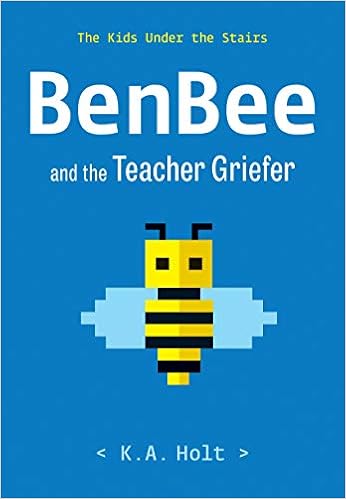
I've been reading an advance copy of The Kids Under the Stairs:  BenBee and the Teacher Griefer by K.A. Holt, who just happens to be a local author!


If you're a Harry Potter fan, you might be thinking the kids in the title are in a closet...but they're not. Ben Bellows (Ben B.), Benita (Ben Y), Javier, and Jordan J are attending summer school in the space under the stairs in the school hallway after failing the sixth grade language arts part of the FART. It's really the FRAAT--Florida Rigorous Academic Assessment Test, but everyone calls it the FART, including Ms Jackson, their teacher.

You are divergent thinkers, Ms Jackson tells them.  All four hate reading for different reasons.  Ben B. has trouble making sense out of words; it feels like it takes forever to finish even a page, so he's never finished a book.  Ben Y has a hard time reading, too.  Javier refuses to read out loud and spends his time in class drawing comics instead.  Jordan J is the class clown, and has a hard time paying attention.

The one thing they are all good at is Sandbox, a video game in which you build worlds and avoid ghosts.  When they play Sandbox, they feel smart and accomplished--the exact opposite of how they feel in school.  Ms Jackson decides to use Sandbox as an incentive for completing work each day--but is that allowed in school?  Will Ms Jackson and the students get in trouble for playing video games?  After all, that kind of "smart" isn't measured by the FART.

If you like Minecraft, if you think school is hard, if you want to know what kids who have trouble learning might be thinking, then you'll like BenBee and the Teacher Griefer.  The story is told in the students' voices, each chapter written as they think:  Ben B's and Ben Y's free verse, Javier's comics, Jordan J's stream-of-consciousness prose.  BenBee is recommended for third grade on up.

It's Monday, and I'm reading a "windows and mirrors" book--a window into the thinking of students who have difficulty learning, and a mirror because I've taught students like Ben B, Ben Y, Javier, and Jordan J.  How have books been windows or mirrors for you?    

Monday, July 6, 2020

It's Monday! What are you reading?

I wish I could say that I am a couch potato these days, getting lost in book after book.  But I am one of those people who's having a harder time reading, even though I don't feel anxious on the surface.

But I persevere, barely keeping up with the How to Be An Anti-Racist book study I joined, and following up on book recommendations here and there to see if something new will spark a reading binge.

Two new books I picked up this week:
I've had this book on my to-purchase list for awhile; when a fellow Tuesday Slice blogger used it as her inspiration for a post, I knew I had to get a copy for myself--and I'll be purchasing one for my school library this fall.  

Irene Latham and Charles Waters also wrote Can I Touch Your Hair?, a well-received poetry book on race and friendship; this is their second collaboration.  Dictionary for a Better World is part poetry book, part writing manual, part social-emotional curriculum.  The A to Z component consists of feelings and self-care topics such as ally, empathy, nature, and wonder.  Every poem is written in a different form, explained at the bottom of the page--many of which were new to me!  There is a quote accompanying each entry.  The authors add their own thoughts and explanations for each poem, and then challenge us to action with a "tip".

As if the entries weren't enough, Latham and Waters included a list of works they referenced, as well as an extensive list of recommended books and poetry resources.  There is even a gratitude list at the end (the first item-"The 8-1-1 section of the library"--is my favorite).  I can see Dictionary for a Better World becoming a favorite resource on many teachers' desks this coming school year, at all levels.

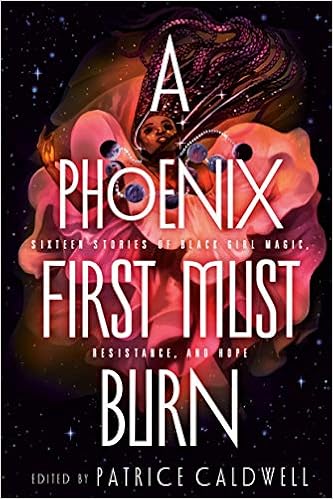
My just-for-fun reading this week is A Phoenix First Must Burn: Sixteen Stories of Black Girl Magic, Resistance, and Hope, edited by Patrice Caldwell.  
Science fiction and fantasy are my go-to genres, and this book of short stories fits the bill nicely--especially with my shortened attention span.  I'm only one story in, and thoroughly enjoyed the focus on the female protagonists, the blurring lines of finding humanity in our enemy, and the time-traveling twist at the end.  I'm looking forward to the next fifteen stories, even if I can only manage one a day!  This book is for young adults on up.

It's Monday, and I've escaped into poetry and sci-fi this week.  What are your go-to genres when you want to get lost in a book?

Monday, June 29, 2020

It's Monday! What are you reading?

It was time to pull another kidlit book from my to-read pile, and my hands landed on an ARC (advance readers copy) sent to me from Penguin/Random House earlier this year:
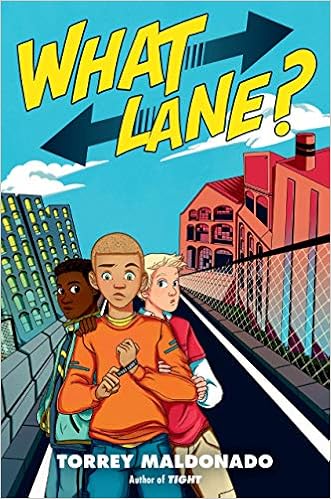
What Lane? by Torrey Maldonado has already received starred reviews from Kirkus and School Library Journal.  Sixth-grade, mixed-race Stephen is trying to navigate the "lanes" he sees around him--the Black kids' lane, the White kids' lane; the don't say anything lane, the speak-up-speak-out lane; the fight-back lane, the talk-it-out lane.  The world is treating him differently now that he's growing up, and he's not liking a lot of what he sees.  But how do you handle it when you don't know which lane you fit in, which actions you should take?

This book covers a LOT of ground in 144 pages--the ever-present adolescent need to fit in, White privilege, the "talk", generational racism, White and Black allies, the ease of interracial relationships that is possible with shared interests, peaceful versus violent confrontation.  What Lane?  dovetailed nicely with the latest chapter I read of Kendi's How to Be An Antiracist, about color and the artificial hierarchy based on the lightness (or darkness, for Whites) of one's skin, even within racial groups.  In the end, Stephen decides his own lane is best--which aligns with Kendi's anti-stereotyping message.

It's Monday, and I'm recommending What Lane? as a great sliding glass door/ mirror book.  Its short chapters and overall shorter length make it an excellent read-aloud choice for middle grade educators and students, sure to start some interesting and enlightening conversations.

Monday, June 22, 2020

It's Monday! What are you reading?

I have been reading more "adult" books this week than kidlit.  I FINALLY got around to finishing The Guernsey Literary and Potato Peel Pie Society by Mary Ann Shaffer and Annie Barrows.  Yes, I know I'm late to this party; I bought the book back in April 2018, read the first two chapters...then I'm sure the end-of-year school chaos ensued.  I'm so glad I picked it up and finished it; the story brought a much-needed smile to my face, as did the ending to Bernice Buttman, Model Citizen by Niki Lenz, just like I predicted last week.


I am currently still making my way through Ibram X. Kendi's How to Be An Antiracist for our district book study, and finishing up Insignificant Events in the Life of a Cactus by Dusti Bowling. 

What's up next?  My annual re-read of Anne Morrow Lindbergh's Gift from the Sea.  It will be interesting to see what connections I make this year, given the text on racism, socioeconomics, and disability I've been reading.

It's Monday, and I'm visiting old and new books this week!  What's on your reading pile?  Are you visiting any old favorites?  

Monday, June 15, 2020

It's Monday! What are you reading?

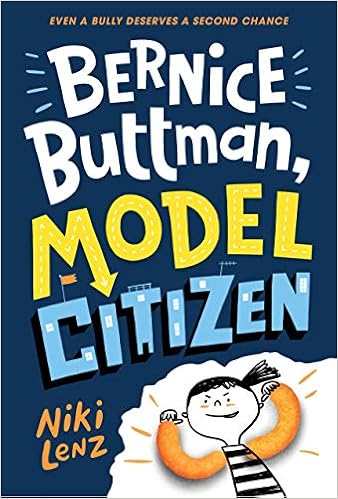
As usual, I've got more than one book going on at a time!  I'm still reading Insignificant Events in the Life of a Cactus--and I'm really enjoying it--but I had to set it aside for a moment to read a Bluebonnet Award Nominee, Bernice Buttman, Model Citizen by Niki Lenz.


Fifth-grader Bernice is one of those kids a teacher can't help but feel sorry for--the kind always getting in trouble as armor against expected insults, with big budget dreams but living with a low budget family.  You'd think the hardest blow would come from her mother taking Bernice's fraudulently-earned money, but then Mom and her boyfriend decide to move to California, leaving the older brothers to fend for themselves and Bernice in the care of an aunt...who just happens to be a nun, living miles away in a small town.  Can Bernice change her ways and fit in to her new surroundings, as her hometown librarian suggests?

I love that the public librarian is Bernice's email-pal in this book, and that we get to hear the story through Bernice's perspective.  I'm a little more than halfway through, and have a sneaking suspicion that I'll be smiling at the end.

My educational reading during the next few weeks is How to Be An Antiracist by Ibram X. Kendi.  This is a book for young adults on up.  I'm participating in a book study offered by my school district, and hope to learn more about my behaviors and thoughts regarding racism and learn ways to promote equity in my school and library.

On a side note:  this is the last "It's Monday, What Are You Reading?" post that I'll be tweeting out on Sommer Library's Twitter account.  Since I'll be rejoining the staff of Anderson Mill Elementary School in the fall (as their librarian this time!), I will be posting this blog on that account starting at the end of July.  I will continue sharing it on my personal Twitter account as well-- @cmargocs.

Thanks to all who read this blog and are following me on my journey as a librarian in Round Rock ISD!  It's Monday--what are you reading this week to learn something new, and to bring a smile to your face?

Monday, June 8, 2020

It's Monday! What are you reading?

I'm going to confess right here:  I'm not much of a nonfiction history reader.  I'll read a biography or historical fiction now and then, but that's about as close as I get.  

I made an exception last night.  I'm still processing books for the library, and this one came up in the pile.  
Cover: Flu Pandemic of 1918
They say timing is everything, right?  How could I not read about the event to which our current coronavirus pandemic keeps getting compared?

The description of the "Spanish influenza" scourge eerily matched the details of COVID19.  Transmission from animal to human, acquired by exposure to respiratory secretions, spread through travel by infected persons.  In 1917-1918, those persons were primarily soldiers, living in tight quarters and deployed to fight World War I.  They carried the virus from the U.S. to Europe, where it mutated and returned for a second, more deadly wave.  The symptoms seem to match up with COVID19, too.

If you have a middle grade-on-up reader who is curious about our current pandemic and how we've come to manage such outbreaks, this 48 page book can lend a historical perspective.  Nonfiction text features such as primary source material, photographs, web links, glossary, index, and bibliography make it a great teaching tool for beginning researchers.
*******************

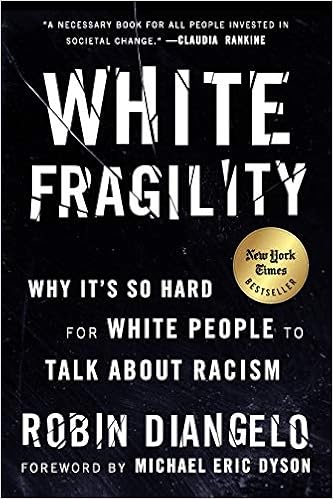
The other books I'm reading this week:  Insignificant Events in the Life of a Cactus by Dusti Bowling (liking it so far, recommend for fourth grade on up) and White Fragility:  Why It's So Hard for White People to Talk About Racism by Robin DiAngelo (a book for adults).
Insignificant Events in the Life of a Cactus by [Dusti Bowling]        

A reminder for our Round Rock ISD students:  don't forget to check out our district summer reading website for more reading resources and our Beach Blanket Bingo reading challenge!

It's Monday, and ABDO Publishers' The Flu Pandemic of 1918 captured my attention!  Are you reading any books related to current events?