Monday, May 30, 2016

It's Monday! What are you reading?

Memorial Day has special meaning for a military BRAT.  Most of us have worried that a parent won't return from a tour of duty.  For some of us, that worry became grief when a letter came, or a soldier arrived at the front door with official condolences.

I am lucky.  My father survived a tour in Vietnam as an Army recruit and three tours in the Gulf War as a government contractor.  
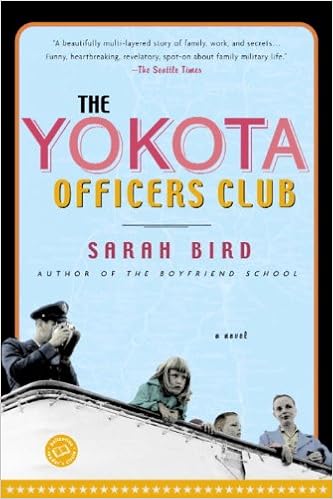
I don't remember books written just for military third-culture kids when I was growing up.  I know we have the Piper Reed series in my school library, though I confess I haven't read them yet (maybe the fact she's a Navy BRAT has something to do with it, and I'm unfamiliar with having a parent at sea).  As an adult, the book that's come the closest to describing the life I knew on base was  The Yokota Officers Club by Sarah Bird, in which the setting is familiar, but the dynamics in this Air Force family are not what I experienced growing up.  Hmmm, maybe I need to write a book?

The particular culture of military children was documented in the movie "BRATS:  Our Journey Home".  I would recommend it for teens and older, as it touches on some of the darker aspects of military life on base.  I cried a bit while watching, nodding my head every few minutes as common BRAT memories were displayed and explained on the screen.

Getting back to books for BRATs--in my search for such books, I came across this project shared by a fellow librarian Jan Pye Marry.  It's been updated as of 2014, and I know we have a few of the books she mentions on our own shelves in my school library.  Thanks, Ms. Marry, for finding books for such a special group of children.

It's Monday, and this Memorial Day, let's think of the kids of the fallen, too.  They've served our country in their own way.

Monday, May 23, 2016

It's Monday! What are you reading?

I've mentioned before that I'm a slow reader, and also have less time for reading during the school year--I get most of my reading done during summer break.

In the midst of May madness (end of school year tasks, prepping for summer activities, welcoming our new college grad back home), I took a quick peek at my Facebook feed and saw the American Library Association's #Readathon2016 challenge.  

For once, I decided that my reading pile took precedence over my to-do list.  I gathered my pile of books--some I needed to finish, others I hadn't started yet--found my one-hour timer....and started a load of laundry.

Then I plopped into a chair, started the timer (restarted it three more times), and finished/ read three of the books on my pile, and got 120 pages farther into a fourth! 


Love Wins by Rob Bell was suggested by a pastor friend.  Thought provoking religious material on the subjects of heaven, hell, and redemption; I'm going to recommend this book to my friends, because I'd like to discuss Bell's perspective.  It's only 224 pages, but took me a few sittings because I had to think and process along the way.

Lawn Boy and Lawn Boy Returns by Gary Paulsen are from my library shelves.  Recommended by a substitute on my campus, I decided I needed some light, fun reading.  They are short books, too--I read each in about an hour, and learned a bit about economics in the process.  Paulsen makes the possibility of a kid becoming rich from a lawn-mowing business almost plausible.

Alas, I still haven't finished The Mysterious Benedict Society by Trenton Lee Stewart.  I was pleased with my progress, though, and plan to finish it this week.  

I did finish five loads of laundry in between timer resets.

The other three books?  They'll be at the top of my summer reading pile!

Happy reading this Monday!

Monday, May 9, 2016

It's Monday! What are you reading?

I must confess that I am still working on The Mysterious Benedict Society, so it will be a picture book day today!

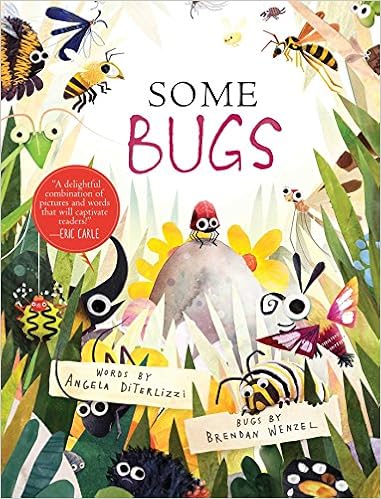
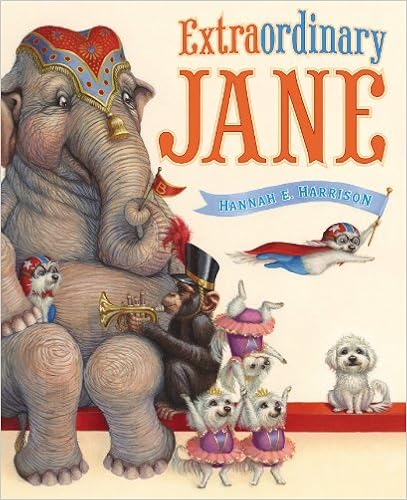
The days in The Book Nook are dwindling, as our library nears end-of-year inventory time.  I'm finishing up the year with some books from our Texas 2x2 list, a wonderful resource geared for the 2-year-old through second grade children.  We are currently reading Some Bugs by Angela DeTerlizzi, illustrated by Brendan Wenzel, and Extraordinary Jane by Hannah E. Harrison.

Some Bugs is perfect for this time of year in Texas, because bugs are EVERYWHERE at the moment.  The text is simple, mainly action verbs describing what bugs do--"some bugs glide, some bugs hide"--and the oversized book is chock full of beautifully illustrated two-page spreads of backyard bugs. The last pages are pictures of every bug shown with their proper names.  My students found at least three or four they were familiar with, and learned much more!

Extraordinary Jane is also a simple story with pictures worthy of poring over.  We started reading the cover--what is the setting, and who do we think Jane is?  The circus was the correct answer to the first question, but most of us missed the second, thinking the elephant was the main character.  Jane happens to be the small dog on the cover, born into a circus family but lacking the talents of her parents and siblings.  The ringmaster tries to make a circus act with Jane...but her talents lie in other areas.  This is a sweet story about the gifts we possess just by being ourselves.

It's Monday!  What are you reading this week?

Monday, May 2, 2016

It's Monday! What are you reading?


Promoting picture books may be one of the toughest tasks I have on my campus of high-achieving students.  Some of my youngest students (and their parents) are so eager to jump into chapter books as soon as their assessed reading level points them in that direction.  It's a balancing act; I don't want to squelch their enthusiasm for reading, but I don't want them to miss out on the experience that picture books provide.  

I'm convinced that the ability to read pictures--to be visually literate, not just print literate--is tied to other important academic and social skills.  In a picture book, the words only tell part of the story, and the reader must fill in the blanks with information from the illustrations--a built-in lesson on inference,which always seems to be an area of need in our assessment results.  This ability to "read between the lines" is essential to understanding print literature and critical thinking.

I also believe that reading pictures is practice in reading social situations, too.  Paying attention to the details in one's environment, the expressions on people's faces, the "vibe" of the space you enter helps you navigate socially.  Spending time looking at the illustrations in a book helps children practice those skills.

**********
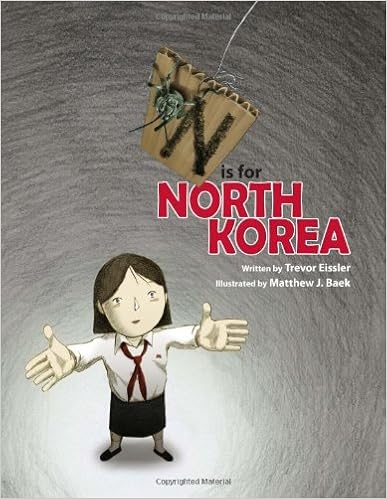
I picked up an interesting picture book at our librarians' meeting this year:  N is for North Korea, by Trevor Eissler, illustrated by Matthew J. Baek.

Na-Young is a little girl living in North Korea who finds out she has a cousin in South Korea.  She wants to contact her, but her father tells her that isn't possible.  Upon receiving her first helium balloon, she hatches a plan to use the balloon to send a message to her cousin.

This book is a great example of pictures expanding the scope and depth of a story.  While the words tell a simple tale of a girl trying to get a message to a cousin, the illustrations allude to the political climate in North Korea and the tensions with South Korea.  Getting older elementary students to wonder about the details (the pictures on the wall, propaganda posters, mode of transportation, soldiers at the border) can segue into learning about those two countries.

So please, don't be in such a hurry to rush your young students into chapter books, and let your older ones venture into the picture book section without judgement, too.  There is learning to be had in the "Everybody" section of the library.

Monday, April 25, 2016

It's Monday! What are you reading?

It's National Poetry Month, so it's only fitting that the books I read this past week are written in verse!

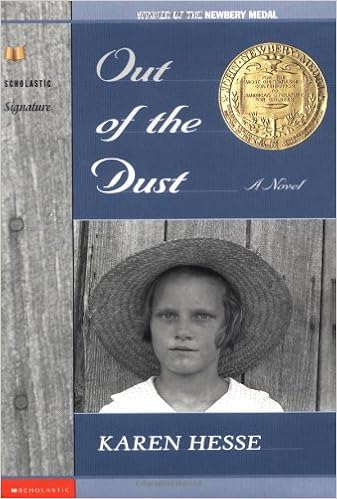
I finished Karen Hesse's Out of the Dust, a Newbery winning fictional memoir of a young girl named Billie Jo living in the Dust Bowl of Oklahoma in 1934-35.  Dust permeates every part of her life.  She describes how the dirt clouds move and settle in her home and school, and even her body, as it covers her skin and works its way into her mouth, nose, and eyes--the grittiness of the dust is ever present.  Hesse does not sugarcoat the difficulties of the farmers or the tragedies that occurred during this period, but because of Billie Jo's determination, we are pulled through the tough times with her family.

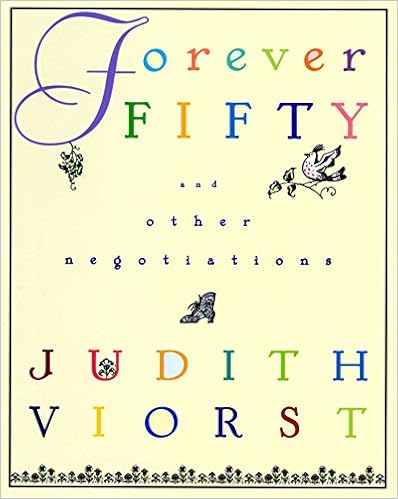
My before-bed reading has been Judith Viorst's Forever Fifty and other negotiations, a collection of poems celebrating the ups and downs of turning fifty.  I am a fan of Viorst's Alexander and the Terrible, Horrible, No Good, Very Bad Day, so I bought her poetry book as a gift to myself for my fiftieth.  The poems are quirky and wise, with some lamenting over changes in body and relationships and some happiness with settling into your skin and knowing one's mind and purpose. I find myself reading and rereading each poem, just one or two at a time to think about before tucking in for the night.


It's Monday; what's on the nightstand next to your bed?

Monday, April 18, 2016

It's Monday! What are you reading?

My fifth grade Book Lunch Bunch is responsible for most of the stretching I do as a reader during the school year.  There seems to be a hole in my reading history of children's chapter books during the last two decades for various reasons, and reading with the Lunch Bunch is helping me fill in that hole book by book.

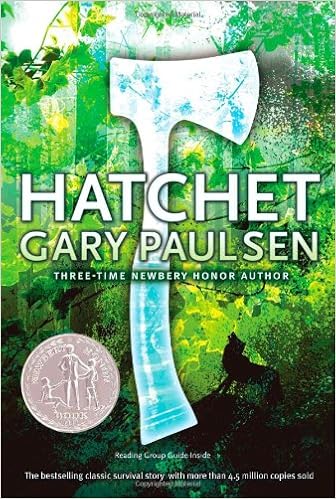
A good example of this is Gary Paulsen's Hatchet, a Newbery Honor book originally published in 1987 and one of our current reads.  It' not my usual genre, but I'm glad it was the students' choice this month.  The main character, Brian Robeson, is thirteen and trying to sort out the life changes that come with the months-old divorce of his parents.  His father has summer visitation rights, and Brian is flying out to Canada to see him when the single-engine plane crashes in the wilderness.  With little more than a hatchet, gifted by his mother for the trip, Brian must survive on his own, waiting for an improbable rescue.  

In The Book Nook, I've been reading The Most Magnificent Thing by Ashley Spires. The students are introduced to a "regular girl" and her best friend--her dog.  The girl gets a "wonderful idea", and attempts to make it a reality.  She keeps trying and trying...but the results don't quite align with the idea in her head.  There are some great verbs to use as mentor text while she is working!  The problem-solving process and portrayals of perseverance, frustration, and coping skills are great for open-ended questioning on the lessons we can learn from Spires' book.

It's Monday; what are you reading with your students this week?

Saturday, April 16, 2016

Classroom helpers--an antidote for anxiety?

Reference:  The Washington Post, "The surprisingly easy way to reduce your anxiety."  Accessed 16 April 2016. 

https://www.washingtonpost.com/news/to-your-health/wp/2016/04/07/the-surprisingly-easy-way-to-reduce-your-anxiety-thank-you-very-much/?tid=ss_fb-bottom 


I am not a psychologist.  I do not spend my time collecting data on the emotional/behavioral health of the 1000+ students on my campus.  I do get to collaborate on a daily basis with great teachers, and observe students during lessons and check-out time in the library.  While I would like to think of the library as an anxiety-free zone, I sometimes see it in our students.  I definitely hear about it from the teachers (student anxiety, that is....teacher anxiety is a whole 'nother blog post!).

Reading the referenced article from The Washington Post, I began thinking about student anxiety in our pre-college population, and how it seems to be on the rise.  I'm sure there are a multitude of reasons for this increase--crammed curriculum, overscheduling, a lack of time to play and develop social and coping skills come immediately to my mind. Some of those things we have control over as educators; some we don't.

What can we do in our classrooms and libraries to help ease this anxiety?  According to the article, accomplishing acts of kindness may play a role in doing just that. 

While some children are "givers" by nature, not every child is hard-wired to think up such acts, much less perform them.  We can set up structured acts of kindness in our educational settings as opportunities for students to contribute to the well-being of our classroom, creating situations that make them positive contributors, putting others' well-being first, and opening up avenues for students to be on the receiving end of gratitude.

I know a lot of teachers do this already--by assigning classroom jobs to their students.

Yes, the mundane tasks of running a classroom, such as passing out paper, sharpening pencils, watering plants, straightening furniture and running notes to the office may be more efficiently done by an adult.  Yes, I know that there is a lot of curriculum that needs to be covered, that students need to be engaged in academic work as much as possible.

But when did we decide that the academic work is more important than the communal aspect of our classroom?  Brain-based research has shown us that students work best when they feel safe and accepted at school.  Anxiety has the opposite effect; true learning doesn't occur when students feel constantly on edge.  (To be clear, we are talking about generalized anxiety, not the "good kind" of stress that drives us to study harder and perform better in school.)  Classroom jobs may be the ticket for decreasing stress and anxiety and increasing learning.

If you don't have a classroom job rotation, I propose that helpers, or even class-wide tasks that contribute to the running of the classroom such as daily trash pick-up, should be a regular part of your classroom.  Yes, the plant may get over-watered, maybe the stacks of chairs might be a bit too high, maybe the pencils don't get passed out as quickly as you would have done.  But the benefits may outweigh the hassles, especially for our anxious students.

Now that I've written this, I am inspired to do the same in my library!  Let's see, they can straighten the furniture, pick up trash, look for wayward shelf markers, put the magazines back in order, turn books to face the right way, pass out lesson materials, help find display books.....